
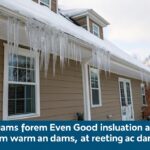
Why Ice Dams Form Even With Good Insulation
Even the best insulation can’t always stop the stealthy, destructive force known as an ice dam. You might be scratching your head thinking, “But my attic is fully insulated—why do I still get icicles the size of swords?” Let’s dive in and melt this mystery once and for all.
Ice dams form due to a combination of factors—insulation being just one piece of the puzzle. In fact, the real culprit often lies in air leaks, poor ventilation, and even the design of your roof. When snow blankets your roof, heat from your attic slowly rises and melts the underside of that snow. This water then flows down to the eaves, refreezes, and forms a dam that traps more meltwater behind it.
Eventually, that water has nowhere to go but in. It seeps under shingles, into walls, and through ceilings—causing thousands in damage. All while your insulation sits there, looking confused.

Table of Contents
ToggleWhat Are Ice Dams and Why They’re a Problem
-
Definition: Ice dams are ridges of ice that form at the edge of a roof and prevent melting snow from draining off.
-
Damage:
-
Water leaks into the attic and living spaces.
-
Mold and mildew from moisture build-up.
-
Rotting wood and ruined insulation.
-
Common Ice Dam Locations
-
Roof eaves and overhangs
-
Valleys between roof angles
-
Gutters and downspouts
How Ice Dams Form: A Step-by-Step Breakdown
| Stage | What Happens |
|---|---|
| Snowfall | A thick layer of snow accumulates on the roof. |
| Heat Transfer | Warm air leaks into attic and heats roof underside. |
| Melting Begins | Snow melts and water flows downward. |
| Refreezing | Water reaches the cold eaves and freezes. |
| Ice Dam Builds | Repeated melting and freezing grows the dam. |
Important Note: Even with perfect insulation, air leaks and poor airflow can cause heat to collect in the attic space.
Why Good Insulation Alone Isn’t Enough
Let’s be blunt—insulation reduces heat loss, but doesn’t stop it entirely. And when that heat escapes unevenly or mixes with cold air due to leaks or poor attic ventilation, trouble brews.
Limitations of Even the Best Insulation
-
Heat still escapes through gaps and thermal bridges.
-
Moisture from house air can still get into the attic.
-
Recessed lights and ductwork in the attic leak heat like a sieve.
The Critical Role of Roof Ventilation
Insulation’s unsung hero is ventilation. It removes excess heat and moisture from your attic, keeping your roof deck cold and preventing snowmelt.
What Proper Ventilation Includes
-
Intake vents: Usually at the soffits to draw in cold air.
-
Exhaust vents: At or near the ridge to push out warm air.
-
Balanced system: Intake and exhaust should be equal in size and capacity.
If your attic isn’t vented well, warm air collects—despite good insulation—and encourages ice dam formation.
Air Leaks: The Hidden Heat Source
Here’s the real villain: air leaks, not insulation.
Common Leak Culprits
-
Chimneys and plumbing chases
-
Light fixtures, especially recessed cans
-
Attic hatches and pull-down stairs
-
Dryer vents and bathroom fans
Air sealing is like zipping up your home’s winter jacket. Without it, heat seeps through even if you’re wrapped in premium insulation.
Heat-Producing Devices That Undermine Your Insulation
-
Recessed lighting: Can lights often breach ceiling insulation, allowing attic heat buildup.
-
HVAC ducts in attic: These act like heating pipes if uninsulated.
-
Bathroom and kitchen exhausts: When these aren’t routed outside properly, warm moist air dumps into the attic.
Understanding Moisture’s Role in Ice Dams
Warm air carries moisture. When that hits a cold roof surface, condensation forms—adding to your ice problem and soaking insulation.
Results of Attic Condensation
-
Wet insulation loses effectiveness
-
Mold and mildew risks skyrocket
-
Roof decking can rot from underneath
Climate, Weather, and Regional Risks
Ice dams are most common where winters are cold and snowy, but rapid freeze-thaw cycles increase the risk.
| Climate Zone | Risk Level |
|---|---|
| Midwest (USA) | Very High |
| Northeast | High |
| Pacific Northwest | Moderate |
| Southern States | Low |
Architectural Design Makes a Big Difference
Your roof’s design may unknowingly invite ice dams.
Problematic Features
-
Complex roofs with lots of valleys
-
Dormers and skylights
-
Shallow pitch that slows snowmelt
Gutters and Downspouts Can Contribute
Clogged or poorly sloped gutters trap meltwater. That water refreezes, turning your gutters into icy culverts that exacerbate ice dams.
Heat Cables: Band-Aid or Cure?
Heat cables work by warming the eaves, but they don’t address the root issue: heat loss.
Risks:
-
Fire hazards from poor installation
-
High electricity bills
-
Doesn’t stop damage higher up the roof
Ice & Water Shield: Not Always Enough
This membrane protects your decking, but only in specific areas like eaves. Water backing up further up the roof still gets in if your insulation and air sealing are lacking.
Blower Door Test & Infrared Scans: Ice Dam Prevention Tools
-
Blower door test: Pinpoints air leaks with precision.
-
Infrared scan: Identifies where heat escapes through the roof.
Both are essential tools in modern home energy audits.
Real-Life Case Studies
Case 1: A modern home with R-60 attic insulation still had recurring ice dams. Why? The recessed lights and an unsealed attic hatch leaked heat nonstop.
Case 2: A 1940s bungalow fixed its persistent ice dam issue by air sealing and adding ridge vents—without touching the insulation.
Insurance and Financial Implications
Most homeowners insurance covers sudden damage from water, but not the cost to fix underlying causes. That means:
-
You pay to replace the insulation
-
You pay to stop it from happening again
Solution: Invest in prevention over repair.
Cost of Fixing vs. Preventing Ice Dams
| Fix | Cost Range |
|---|---|
| Ice dam removal | $500–$2,000 per incident |
| Water damage repair | $3,000–$10,000 |
| Air sealing & ventilation upgrade | $2,000–$4,000 |
| Full insulation overhaul | $5,000–$15,000 |
Moral of the story? Prevention costs far less than repeated repairs.
Future-Proofing Your Home Against Ice Dams
-
Smart thermostats: Monitor attic temperatures.
-
AI systems: Predict risk based on weather.
-
New building codes: Encouraging better envelope design.
Green building practices and technology are making homes more ice-dam resistant.
Read More Also: Battling the Blizzard: Mastering Snow Buildup Prevention on Your Roof
FAQs
Can I prevent ice dams without re-insulating?
Yes, air sealing and ventilation often solve the issue without redoing insulation.
Are heat cables safe and effective?
They can help but should be a last resort—and only installed professionally.
Do ice dams only happen in old homes?
No. Even brand-new homes suffer from ice dams if improperly sealed or vented.
How do I know if my insulation is enough?
A home energy audit or infrared scan can confirm weak spots.
What’s the quickest fix for an active ice dam?
Call professionals for safe steam removal. Don’t chip away at it—it damages shingles.
Is mold always a risk with ice dams?
If water gets into insulation or walls and isn’t dried quickly, mold is highly likely.
Read More Also: Roof Repair vs. Replacement: Key Differences, Costs, & When to Choose
Conclusion: Why Ice Dams Form Even With Good Insulation
Insulation is crucial—but it isn’t your knight in shining armor. Ice dams are a multi-factor issue caused by hidden air leaks, poor ventilation, heat sources in attics, and roof designs. If you’ve been dealing with repeated problems, it’s time to think beyond just R-values and dive deeper into holistic home energy performance.







